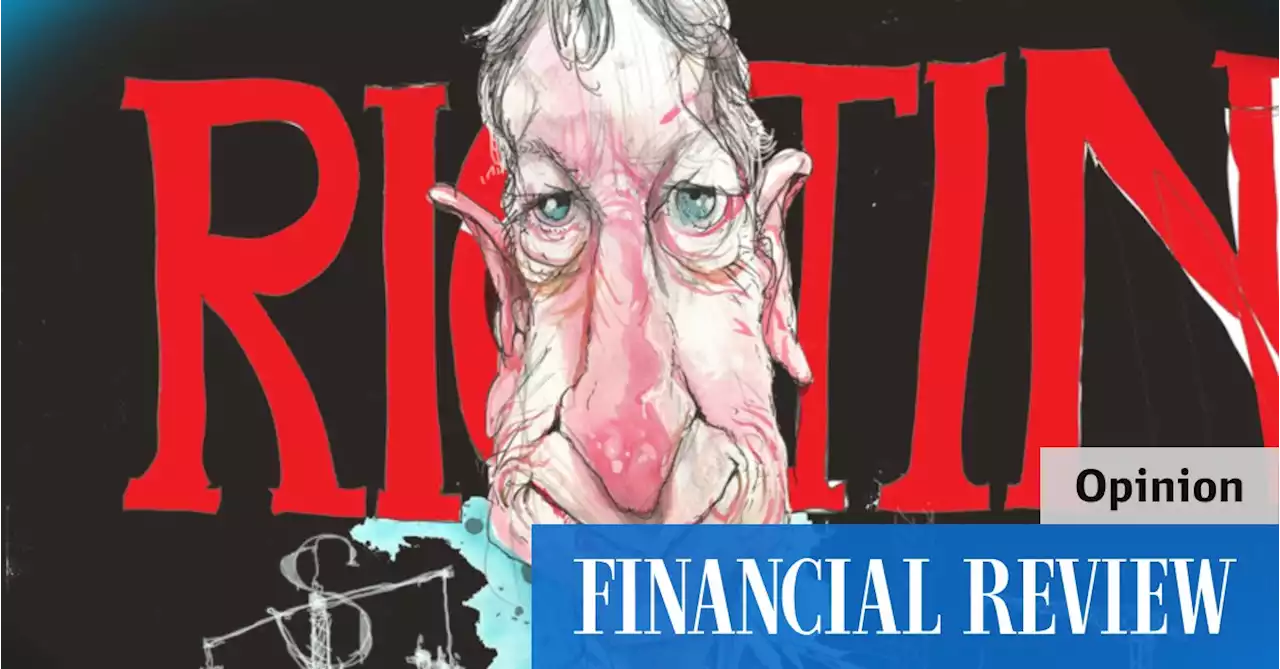
Rio Tinto’s delicate iron ore dance with China

Australia News News

Rio Tinto’s delicate iron ore dance with China
Australia Latest News,Australia Headlines

The reliance of Rio Tinto’s iron ore business on China’s economy is hammered home in its 2021 production numbers. But 2022 will bring a new set of challenges.

Chinese President Xi Jinping’s call for governments and central banks to keep stimulating the global economyAs one of the world’s biggest iron ore exporters, and a company that counts a Chinese state-owned enterprise as its largest shareholder, Rio’s fortunes have long been tied to the fate of the world’s second largest economy.

The miner’s production report for 2021 hammers this home.David Rowe- some beyond its control, but too many of its own making - it was China’s efforts to stimulate its economy that sent Rio’s average realised iron ore price for 2021 surging 45 per cent to $US143.80, providing Rio chief executive Jakob Stausholm with cover to start what will be a multi-year turnaround. Stausholm will be as keen as Xi to avoid a global economic slowdown that would weigh on a Chinese economy that Xi conceded had been placed under “tremendous pressure”, with GDP growth sagging to just 1.6 per cent in the December quarter. While Xi’s call for coordinated global stimulus is unlikely to make much difference to policy decisions in Washington, Canberra or Brussels, Rio says China is acting to boost activity in its domestic economy.China may have shocked world markets by slashing a range of local interest rates on Monday, but Rio insiders see this as just the latest in a string of stimulatory policy tweaks in the last few months.that China is “transitioning from tightening to easing policies following a slowdown in the last quarter of 2021, with mild pro-growth measures in place” to support infrastructure, consumption and, interestingly, the highly indebted property sector, which is the subject of a longer-term reform program inside China. China’s stimulatory efforts have helped iron ore prices rebound from as low as $US90 a tonne in November to around $US124. Rio’s internal view is that Chinese steel consumption will remain robust across 2022 as Xi looks to drive economic growth, but the big price gyrations of 2021 - which saw prices shoot as high as $US230 a tonne in the middle of last year - look less likely. It expects the market will be more balanced in 2022, with demand steady and supply increasing for the first time since Brazilian iron ore giant Vale suffered a dam disaster in 2019. China’s approach to managing COVID-19 is a wildcard: does it continue to pursue its ruthless COVID-zero strategy in the face of omicron, or does it loosen restrictions? The economic implications from either path are still unclear, but the potential for disruption is clear. Tuesday’s production report also provides a touch more insight into the way Rio is dealing with China’s strategy to try and break Australia’s iron ore dominance by developing the Simandou iron ore project in the African nation of Guinea. The high-quality deposit could eventually produce as much as 200 million tonnes of iron ore each year, and thus is seen by China - which essentially controls half the deposit through state-owned enterprises - as a way to wean itself of Australian ore.Rio, which owns the other half of the deposit, is closely watching the development of the Chinese half by a consortium of Chinese and Singaporean groups. Stausholm visited Guinea in early December and the clear message on Tuesday is that Rio very much wants a seat at the table. “We remain committed to an inclusive partnership, seeking mutual and sustainable benefits by developing our project in line with international social and environmental standards,” the company said. The mine, which will need billions of dollars worth of infrastructure to get off the ground, may well be a decade away. But the drilling program that is under way, and the further construction and early development works expected to be carried out in 2022, shows Rio is taking the potential of the project - and the way it could change the company’s relationship with China - very seriously.While Rio will be among those lifting iron ore supply in 2022, it will do some very gently; having seen production fall 4 per cent to 319.7 million tonnes in 2021, it has forecast 2022 production of between 320 million tonnes and 335 million tonnes. This modest growth ambition is no surprise given the extraordinary challenges iron ore boss Simon Trott continues to face. COVID-related issues are certainly not improving, with labour supply Rio’s biggest problem. The opening of Western Australia’s borders on February 5 looms as a double-edged sword; while the flow of workers will improve, omicron’s arrival in WA will create inevitable problems with absenteeism. While Rio has limited control over these problems, its self-inflicted issues also drag on. Rio’s discussions with the Puutu Kunti Kurrama and Pinikura people in the wake of 2020’s Juukan Gorge disaster are progressing, rehabilitation works at the site on track and substantial progress made on a co-management of country agreement. But wider heritage issues stemming from the scandal remain and are compounding Rio’s existing mine planning problems. This is a journey that will take years, not quarters.

We have summarized this news so that you can read it quickly. If you are interested in the news, you can read the full text here. Read more:

FinancialReview /  🏆 2. in AU


Australia Latest News, Australia Headlines


Render Time: 2026-05-14 19:08:17