
What are Old Age Security and the Canada Pension Plan, and how should these financial supports affect your retirement plans?
“We get a lot of media from the U.S., which tends to scare people into thinking our social security could run out too, but it won’t,” Ms. MacDonald says. “All the provinces involved would have to agree before any changes are made to CPP, which never happens.
.” Government can raise contribution rates to keep the plan funded if there is any danger there won’t be enough. And reducing CPP benefits would be political suicide. “If anything, they’ll enhance the CPP, so know that that money will be there. I would argue the CPP is the safest possible place for money in Canada,” she says.Let’s assume you’ve been an absolutely perfect Canadian citizen all these years and will retire with top rates of both CPP and OAS . While $1,900-ish a month is not nothing, it’s probably not enough to live on – and definitely not enough if you plan to travel the world, take up golf or buy a boat. In fact, it works out to just a smidge above the poverty line in Ontario. “Neither the CPP or the OAS is enough to retire on their own and they were never intended to be,” says Mr. Runchey. He explains a common retirement metaphor: “Both were designed as one of three legs on a stool: CPP is one leg, OAS is another, and your personal savings and/or private pension plan, if you have one, is the third leg.” The chair metaphor is apt because each “leg” affects and balances the others. For example, when you take money out of an RRSP it becomes taxable income, says Ms. MacDonald, and you need consider how that works along with your other benefits. To maximize your benefits, you might consider getting professional advice to decide whether and when to tap into each leg to make a“Within the OAS, there’s the Guaranteed Income Supplement, which is for people with really low income to help them avoid poverty,” says Ms. MacDonald. The exact numbers change slightly by tax year – but in 2022, a single, widowed or divorced senior with an annual income of less than $20,784 would be eligible to receive a maximum amount of $1,024 a month. As always, the government will take into account all other assistance and revenue sources and adjust your amounts accordingly, whether that income is from personal funds, like an RRSP, or government assistance, like the CPP. “Basically every dollar you receive from another source means you lose 50 cents off the Guaranteed Income Supplement,” says Ms. MacDonald. They’ll also look at your marital situation; if your spouse is also or already collecting the GIS, for example, whatever amount they receive will be considered as well.This question has no easy answers and entirely depends on a person’s unique situation – and what particular kind of expert you ask. A stockbroker will almost certainly tell you that starting benefits as soon as you can is better – so you can invest the money. Similarly,if you deplete your retirement account as a bridge to receiving the higher CPP benefit at the age of 70. But money today is very tempting. “95 per cent of Canadians take their CPP at 65 or earlier,” says Ms. MacDonald. She compares the situation to the classic marshmallow experiment – ask a toddler to choose one marshmallow right now or two in an hour and just guess what they’ll do. Most grownups do no better, but the 5 per cent who choose to wait until age 70 to collect will reap big benefits. Waiting until 70 for CPP equates to 42 per cent more than if you started cashing in at 65. “If you delay collecting your CPP, you’re basically buying more pension,” she says.Of course you could die in the meantime, and so much of the future is uncertain. “There are a lot of unknowns, like inflation and interest rates, that we can guess but we just don’t know,” admits Ms. MacDonald. The pandemic, an unforeseen event, wreaked havoc on inflation rates and, but without a crystal ball and second sight, the best anyone can do is focus on what is certain. “We know that pension plans are being reduced by employers, we know that people are living longer than before, we know the baby boomers – a quarter of the population – are about to retire with a long life expectancy.” If their children risk having to shoulder the burden because parents’ RRSPs run dry at age 85, the way Canadians think about and plan for retirement could change in the very near future.Most experts recommend that your savings and supports – including CPP and OAS, which won’t run out, plus personal savings like RRSPs that will – altogether add up to somewhere between 60 and 80 per cent of your usual preretirement income. “Of course it all depends,” says Mr. Runchey, “but 70 per cent is a common number I hear a lot.” Whatever your financial means and plans, retirement is a moment of conflicting tensions. On one hand, you could live 30 more years and have to stretch that money out. On the other, you’ve got ais therefore not a number or percentage but a spot where this Catch-22 doesn’t fill you with fear and anxiety. “The best amount is whatever one removes the fear of uncertainty,” she says.Old Age Security is a universal benefit from the federal government to anyone over age 65 in Canada – who have lived here for a minimum of 10 years. The Canadian Pension Plan, or CPP is a benefit for working Canadians who paid into the CPP over the years through regular contributions. Contributing to CPP is mandatory in Canada. In 2022, the maximum monthly OAS benefit was $685.50 while the maximum monthly CPP amount was about $1,250.OAS and CPP are two of three “legs” onto which you should build your retirement plans; the third leg is personal savings, which could include RRSPs, tax-free savings accounts , non-registered investments, and real estate.Most experts say you’ll want 60 to 80 per cent of your working income to retire comfortably, but the best amount is whatever makes you not worry.
Australia Latest News, Australia Headlines
Similar News:You can also read news stories similar to this one that we have collected from other news sources.
 'Dangerous' to think B.C.'s decriminalization plan will reduce OD deaths: researcherDecriminalization of people with small amounts of illegal drugs for their own use has become a reality in British Columbia, but substance users and researchers say the change is expected to make little immediate difference because of a toxic drug supply.
Read more »
 'Dangerous' to think B.C.'s decriminalization plan will reduce OD deaths: researcherResearchers say B.C.\u0027s decriminalization plan is expected to make little immediate difference because of a toxic drug supply.
Read more »
 'Dangerous' to think B.C.'s decriminalization plan will reduce OD deaths: researcherResearchers say B.C.\u0027s decriminalization plan is expected to make little immediate difference because of a toxic drug supply.
Read more »
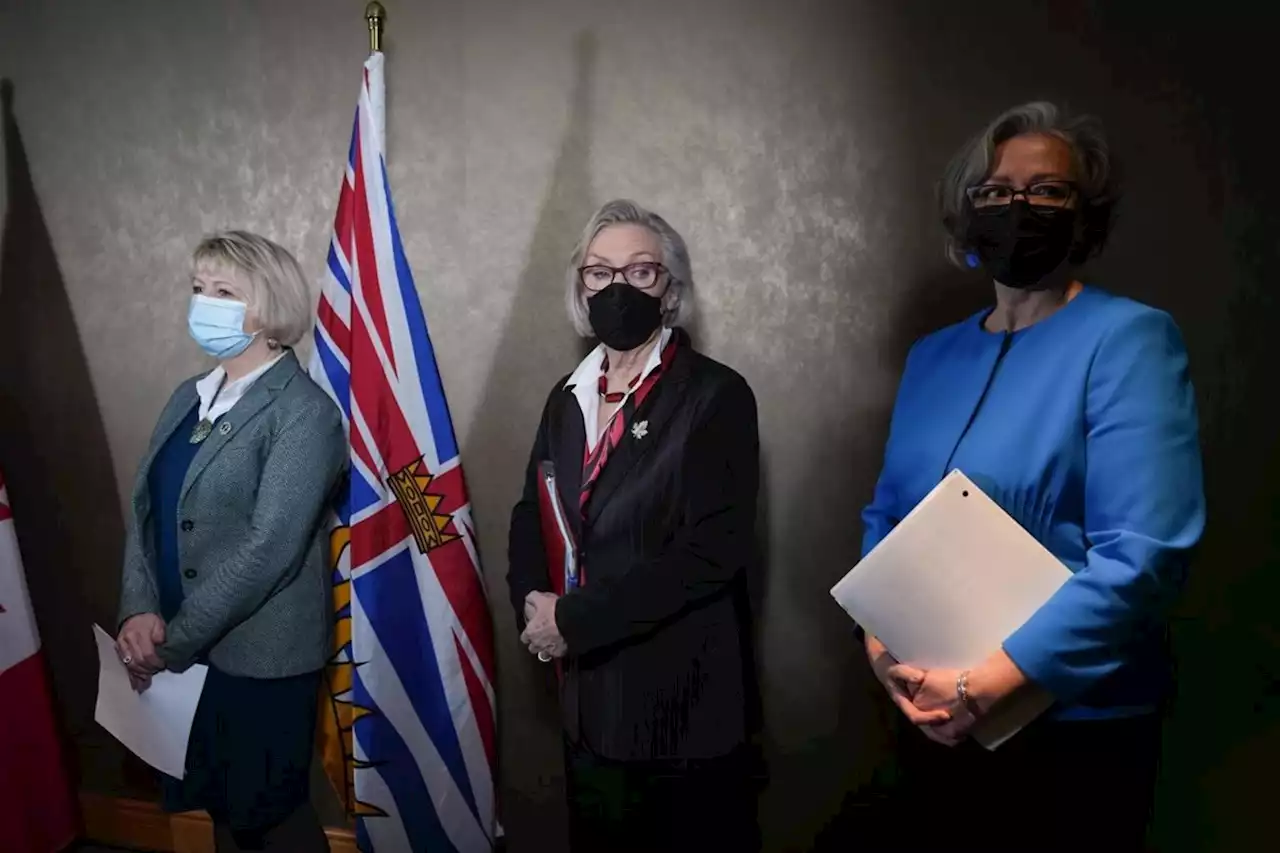 Decriminalization begins in B.C. as coroners service releases overdose death dataVANCOUVER — Decriminalization of people with small amounts of illegal drugs for their own use has become a reality in British Columbia, but substance users and researchers say the change is expected to make little immediate difference because of a to
Read more »
 Decriminalization begins in B.C. as coroners service releases overdose death dataVANCOUVER — Decriminalization of people with small amounts of illegal drugs for their own use has become a reality in British Columbia, but substance users and researchers say the change is expected to make little immediate difference because of a to
Read more »
 Loose Leafs face big test against Bruins before NHL all-star breakWhen the numbers are crunched, the Bruins are slightly better than the Maple Leafs in almost every category. The difference between them, though, has gotten smaller and smaller
Read more »