
Denmark is under scrutiny for its use of 'parenting competency' tests on Greenlandic new parents, which advocates say are discriminatory. The controversy resurfaced after a Greenlandic mother's baby was removed just hours after birth as part of these investigations. Protests erupted in Copenhagen and Greenland's capital, Nuuk, prompting a meeting between Greenlandic and Danish officials. The Danish minister pledged to instruct municipalities to halt the use of these culturally insensitive tests.
Denmark is under pressure to stop subjecting Greenlandic people to “parenting competency” tests that campaigners say discriminate against them, amid uproar over the case of a mother whose baby was removed two hours after she gave birth.
as part of child protection investigations into new parents, and have long been criticised by human rights bodies as culturally unsuitable for Greenlandic people and other minorities. The tests are back in the spotlight after the case of Keira Alexandra Kronvold, a woman of Greenlandic heritage who gave birth in North Jutland this month, sparked furious protests in Copenhagen and in Nuuk, the capital of the autonomous territory. The Greenlandic minister for children, Aqqaluaq B Egede, held an urgent meeting with the Danish minister of social affairs and housing, Sophie Hæstorp Andersen, last week. Afterwards, Egede said the Danish minister had promised to instruct municipalities to stop using the test. But the ensuing statement, issued last Wednesday, stopped short of an outright ban. “I would like to encourage the municipalities in cases involving families with a Greenlandic background to concretely consider stopping the use of the criticised tests,” Andersen said. Children with Greenlandic parents living in Denmark – which formerly ruled Greenland as a colony and continues to control its foreign and security policy – are significantly more likely to be placed into care than those with Danish parents. According to a 2022 report, 5.6% of children with a Greenlandic background living in Denmark are placed into care, compared with 1% of those with a Danish background., is far from the only tool used to assess whether or not a child should be removed from their parents. But campaigners say that as it has not been adapted for parents of non-Danish heritage, it should not be used in their cases at all. “The tests fail to account for potential language barriers or cultural differences. This puts Greenlandic parents at risk of being wrongly assessed in child placement cases,” said Louise Holck, the director of the Danish Institute for Human Rights. She said her organisation was urging municipalities to immediately stop using the tests on Greenlandic parents until the questions could be adapted to Greenlandic language and culture. In a 2022 report, the institute said that because the tests were not adapted to take cultural differences into account, Greenlandic parents ran “the risk of obtaining low test scores, so that it is concluded, for example, that they have reduced cognitive abilities, without there being actual evidence for this.” It said: “Such potential misjudgments can have far-reaching consequences for both children and parents, as in the extreme they can contribute to the forced removal of a child.” Kronvold, 38, was given an FKU test in 2014 before the birth of her second child, a boy, and again recently while pregnant with her third child. Speaking through an intermediary, she told the Guardian that on this last occasion she was told it was to see if she was “civilised enough”. After the first test she was separated permanently from her eight-month-old son and nine-year-old daughter. It is unclear to what extent the test results contributed to that decision, but they are believed to have been among the reasons why, within hours of giving birth to her third child on 7 November, Kronvold’s baby was removed. Psychological assessments of her were made by a Danish-speaking psychologist. Kronvold, whose first language is Kalaallisut , is not fluent in Danish. She can now spend only one hour a week with her baby, during which she is closely watched by a social workerThe local municipality in Thisted, North Jutland, “coldly assessed my worth as a parent,” Kronvold said. “I had grown up between two worlds, proud of my Greenlandic heritage yet often sidelined by a system that measured my value through a lens that barely recognised our culture.” A passage from her case file states that her “Greenlandic background, where even small facial expressions have communicative significance,” would make it difficult for her to prepare the child for “social expectations and codes that are necessary in Danish society”.Kronvold said authorities had taken her daughter away “as if she were a mere statistic … not understanding that my love and tradition were more important than any test score”. She said she was fighting not just for her and her daughter but for all Greenlandic parents who had “lost their children to the Danish system”. Tina Naamansen, the chair of Sila 360, which works on Inuit legal rights monitoring, said Kronvold’s was “one case out of many”. Laila Bertelsen, the founder of Foreningen MAPI, an association that helps Inuit parents in Denmark, echoed that assessment, saying parental competence investigations frequently led to forced adoption and child alienation in Greenlandic families. “The Danish authorities, politicians and the government do not make changes to the law or meet the legal requirements for these serious cases like Keira’s, despite UN special rapporteur José Francisco Calí Tzay who has criticised Denmark for not protecting the rights of Greenlandic families with children,” she said. Aka Hansen, an Inuit film-maker who has been organising protests in Nuuk, said: “We want our rights to be secured and to be protected. The feeling was that people are really tired of nobody acting or protecting us.” Lars Sloth, the director of the child and family administration of Thisted municipality, said: “We are highly aware of the interest in the case of Keira Alexandra Kronvold and take it very seriously. The municipality of Thisted always works based on the best interests of the child, and we follow the applicable laws and guidelines closely.” He added: “Due to the duty of confidentiality, we cannot comment on the specific case, but we can assure you, that all decisions are made with the best interests of the child in mind. We are in dialogue with relevant authorities and professionals to ensure that all aspects of the case are dealt with correctly, as we strive to support families and children as best as possible through our work.”
Greenlandic People Parenting Competency Tests Discrimination Child Protection Cultural Insensitivity
Australia Latest News, Australia Headlines
Similar News:You can also read news stories similar to this one that we have collected from other news sources.
 ‘If I don’t do it, who will?’: Greenlandic MP defends actions in Danish parliamentAki-Matilda Høegh-Dam, who was ordered to leave podium after refusing to translate speech, attacks ‘racist’ mindset
Read more »
 After living in Denmark, I’ve realised Australians are fashion slobsFor months, I lived in sartorial heaven. But when I came home, beautifully styled outfits were replaced with track pants and stretched out T-shirts.
Read more »
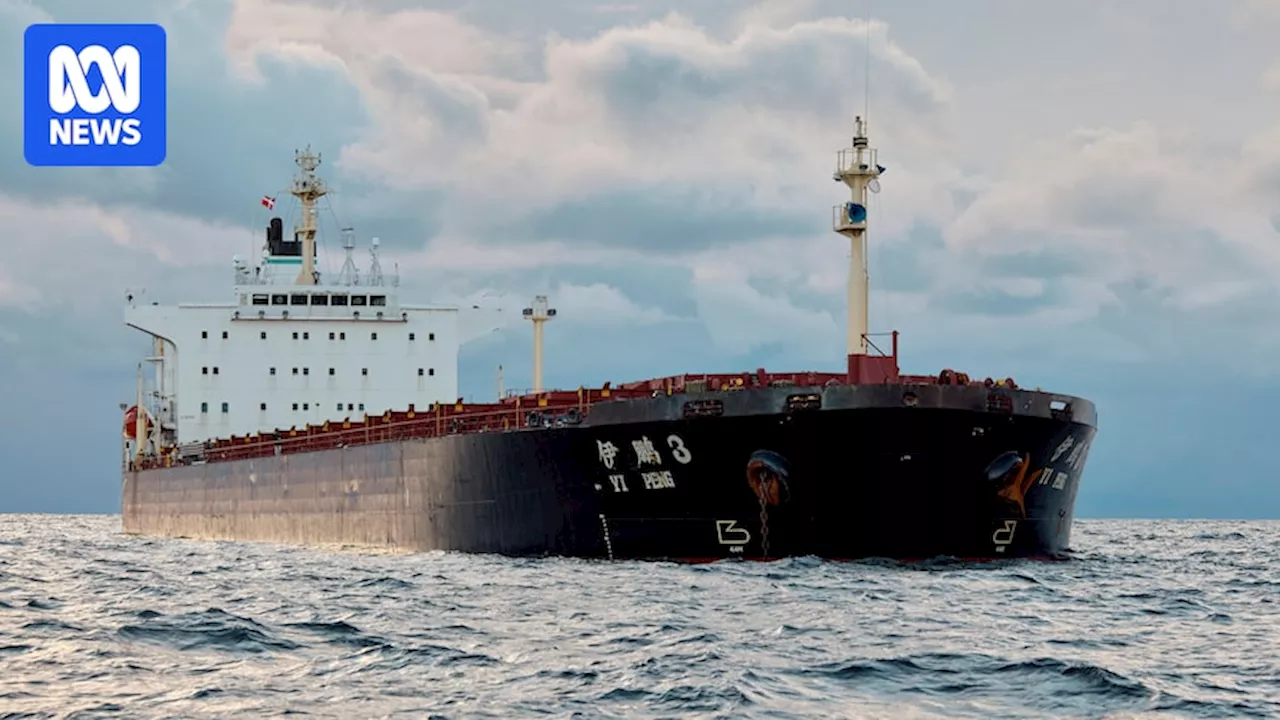 Russia rejects claims of sabotage on undersea cables in Europe as Danish military monitors Chinese shipInvestigations have started after two underwater telecommunication cables were cut in the Baltic sea in a possible act of 'sabotage,' according to European authorities.
Read more »
 American, Danish victims in suspected poisoning in Laos namedThe government of Laos publicly acknowledged the tragedy, which claimed the lives of two Australians, saying it was “profoundly saddened over the loss of lives”.
Read more »
 American, Danish victims in suspected poisoning in Laos namedThe government of Laos publicly acknowledged the tragedy, which claimed the lives of two Australians, saying it was “profoundly saddened over the loss of lives”.
Read more »
 American, Danish victims in suspected poisoning in Laos namedThe government of Laos publicly acknowledged the tragedy, which claimed the lives of two Australians, saying it was “profoundly saddened over the loss of lives”.
Read more »